Building the Design Operating System for a Scaling Product Team
Design Operations frameworks that improved collaboration, documentation, and visibility across design, product, and engineering.
Overview
As the Product Design Manager at Bluebeam, I introduced a set of Design Operations frameworks that helped the design team scale more effectively while collaborating with product management and engineering across multiple product platforms.
These systems created clarity around how design work is planned, documented, reviewed, and delivered, ensuring consistency across teams and improving collaboration between design, product, and engineering.
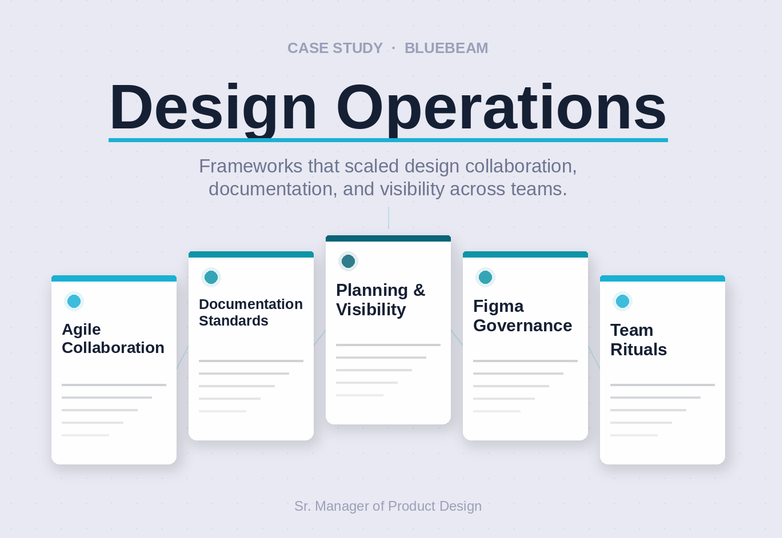
The initiative introduced structured practices across several operational areas, including agile collaboration, documentation standards, design planning, tooling governance, and team rituals.
The Problem
Before introducing Design Ops frameworks, the team faced several operational challenges:
- Design documentation lived in multiple places and lacked consistency
- Engineering sometimes lacked clarity on interaction behaviors
- Designers were unsure when they should participate in agile ceremonies
- Figma files became harder to navigate as projects grew
- Design progress lacked visibility across teams
As the organization scaled, these gaps began to slow collaboration.
My Role
As the Product Design Manager, I led the effort to introduce Design Operations practices that improved how the design team collaborated with product and engineering.
My responsibilities included:
- Identifying operational gaps in the design workflow
- Creating documentation standards for design specifications
- Establishing scalable processes for collaboration with product and engineering
- Defining design participation within agile development cycles
- Introducing governance for design tools and file organization
- Creating team rituals that strengthened collaboration and knowledge sharing
Design Operations Framework
To address these challenges, I introduced a set of Design Operations guidelines and policies that established shared systems for how the team works.
Operational Areas Established
- Agile collaboration framework
- Design documentation standards
- Planning and work visibility systems
- Figma governance and tooling standards
- Team rituals and collaboration practices
- Communication norms for distributed teams
Design Documentation Standards
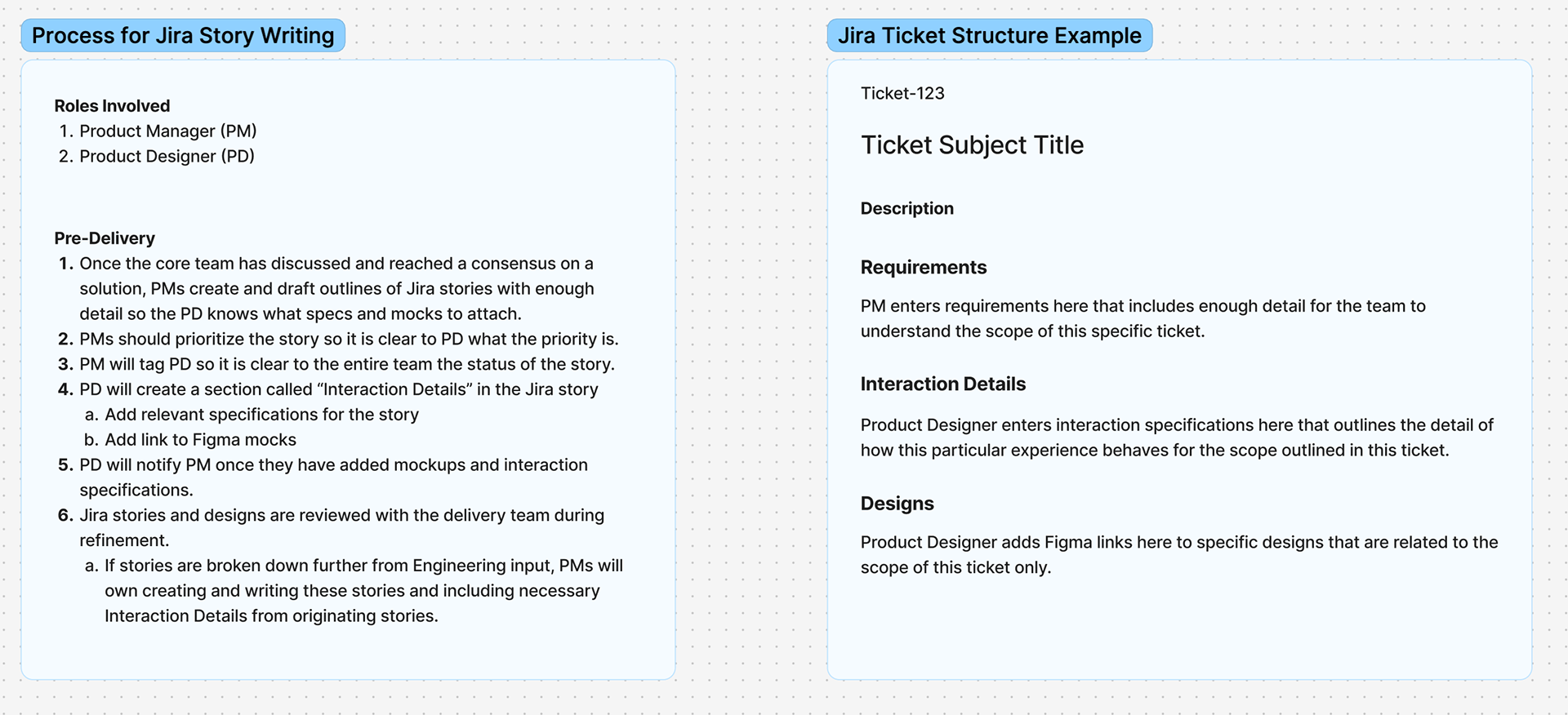
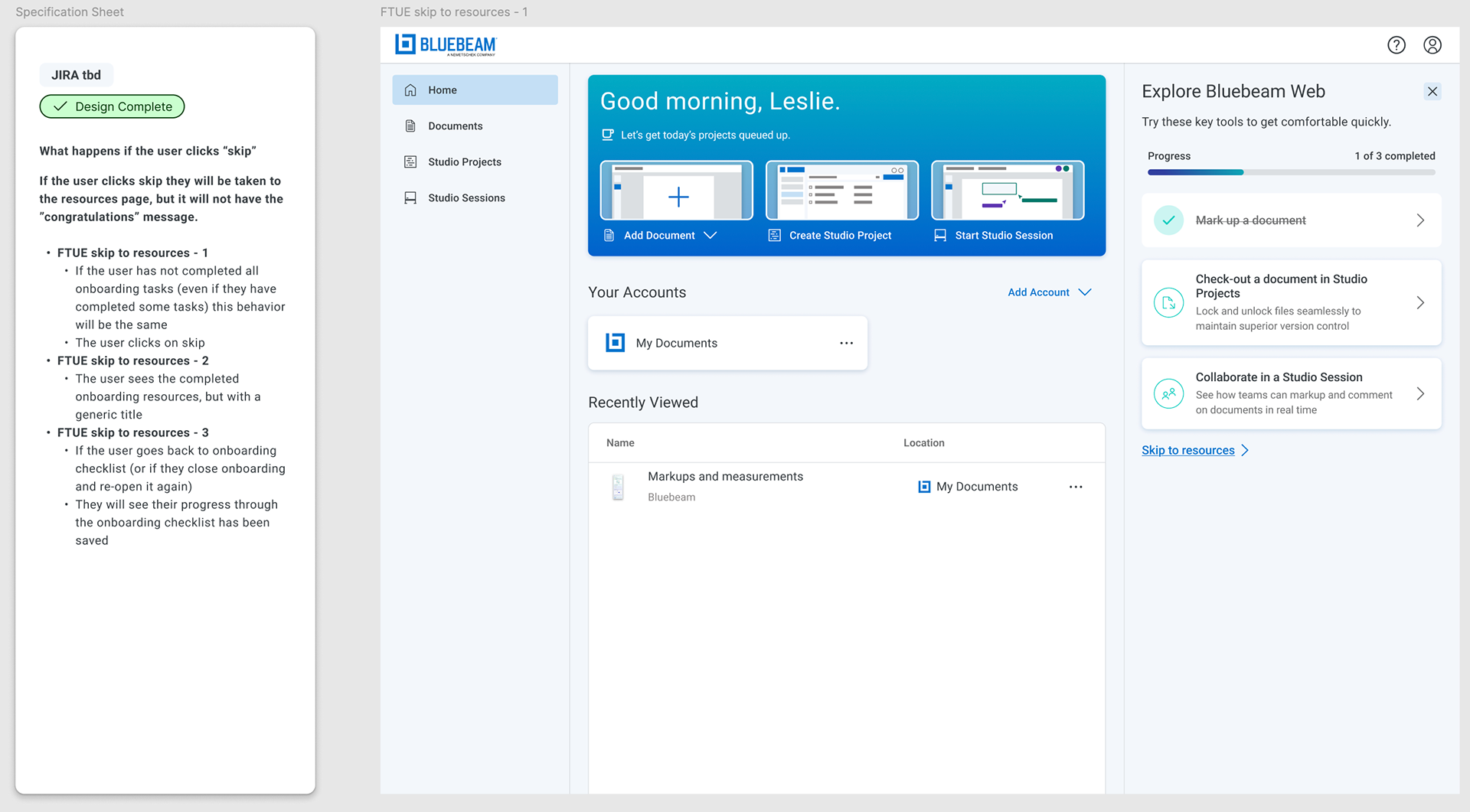
To reduce ambiguity during development, I introduced a standardized approach for documenting interaction specifications.
This framework defined:
- Where design specifications should live
- How interaction details should be documented
- Responsibilities between product managers and designers
- How specifications are reviewed during refinement
By establishing consistent documentation practices, engineers gained clearer visibility into how experiences should behave, reducing confusion during implementation.
Agile Collaboration Framework
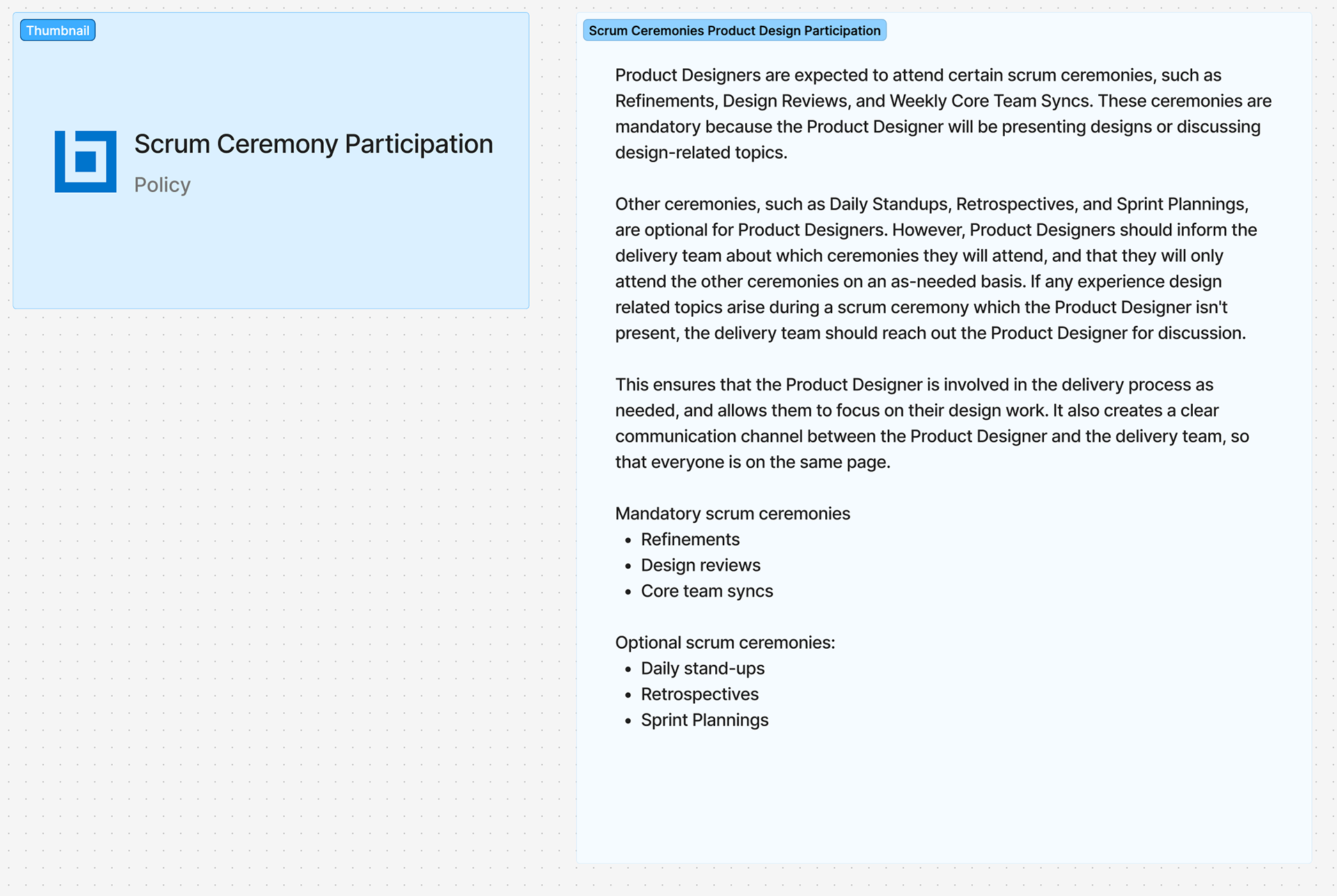
To improve alignment with product and engineering teams, I introduced guidelines clarifying design participation in scrum ceremonies.
This framework ensured designers were present during discussions where design decisions were needed, while protecting time for focused design work.
Mandatory ceremonies
- Design reviews
- Refinements
- Core team syncs
Optional ceremonies
- Daily standups
- Sprint planning
- Retrospectives
These guidelines helped improve coordination between design, product, and engineering teams while creating clearer expectations for designers within the delivery process.
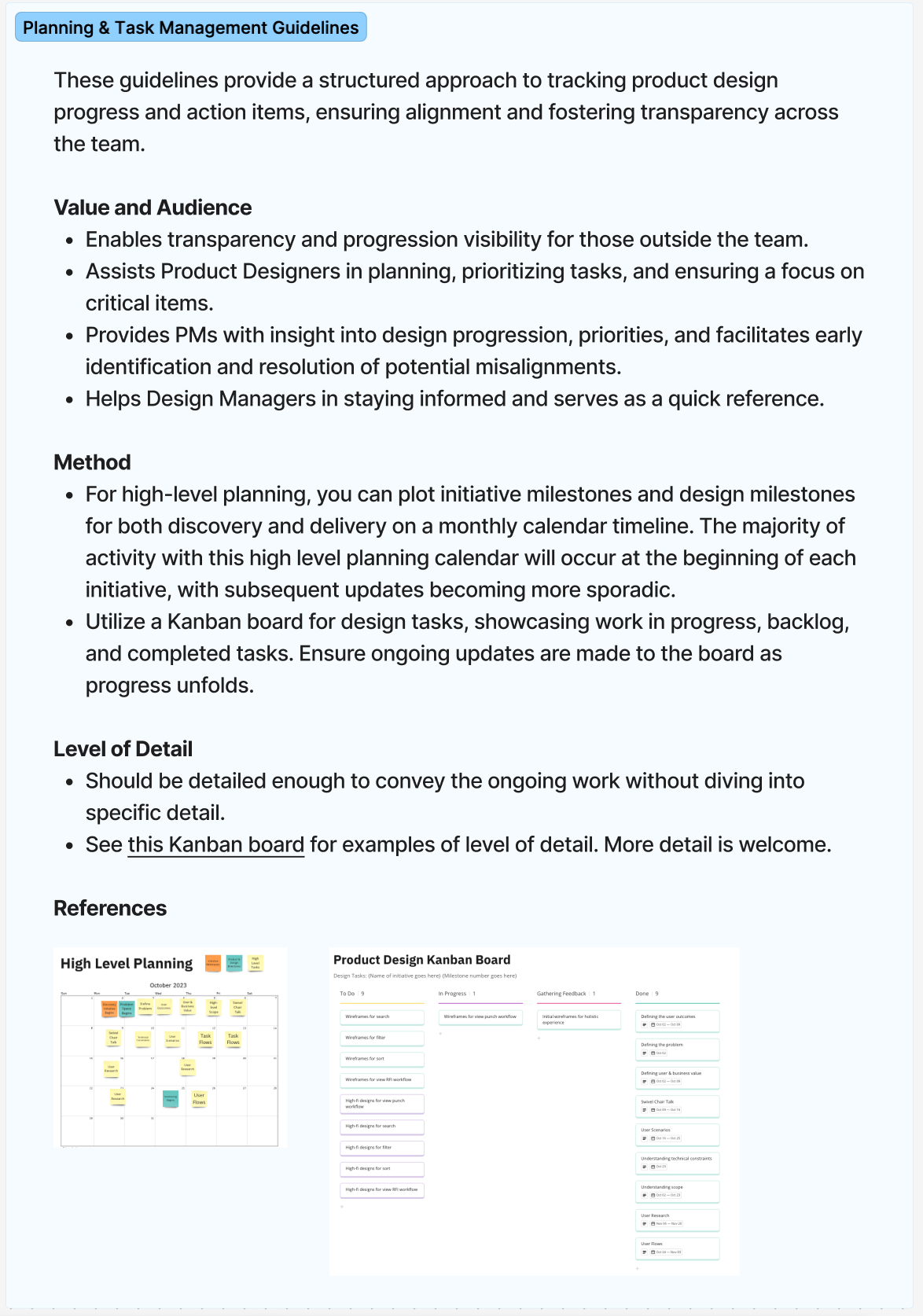
Design Planning & Work Visibility
To provide greater transparency into design work, I introduced planning structures that made design progress easier for stakeholders to understand.
These included:
- Initiative-level planning timelines
- Design milestone tracking
- Kanban boards for design tasks
These systems helped product and engineering partners better anticipate design timelines while helping designers prioritize their work more effectively.
Figma Governance & File Organization
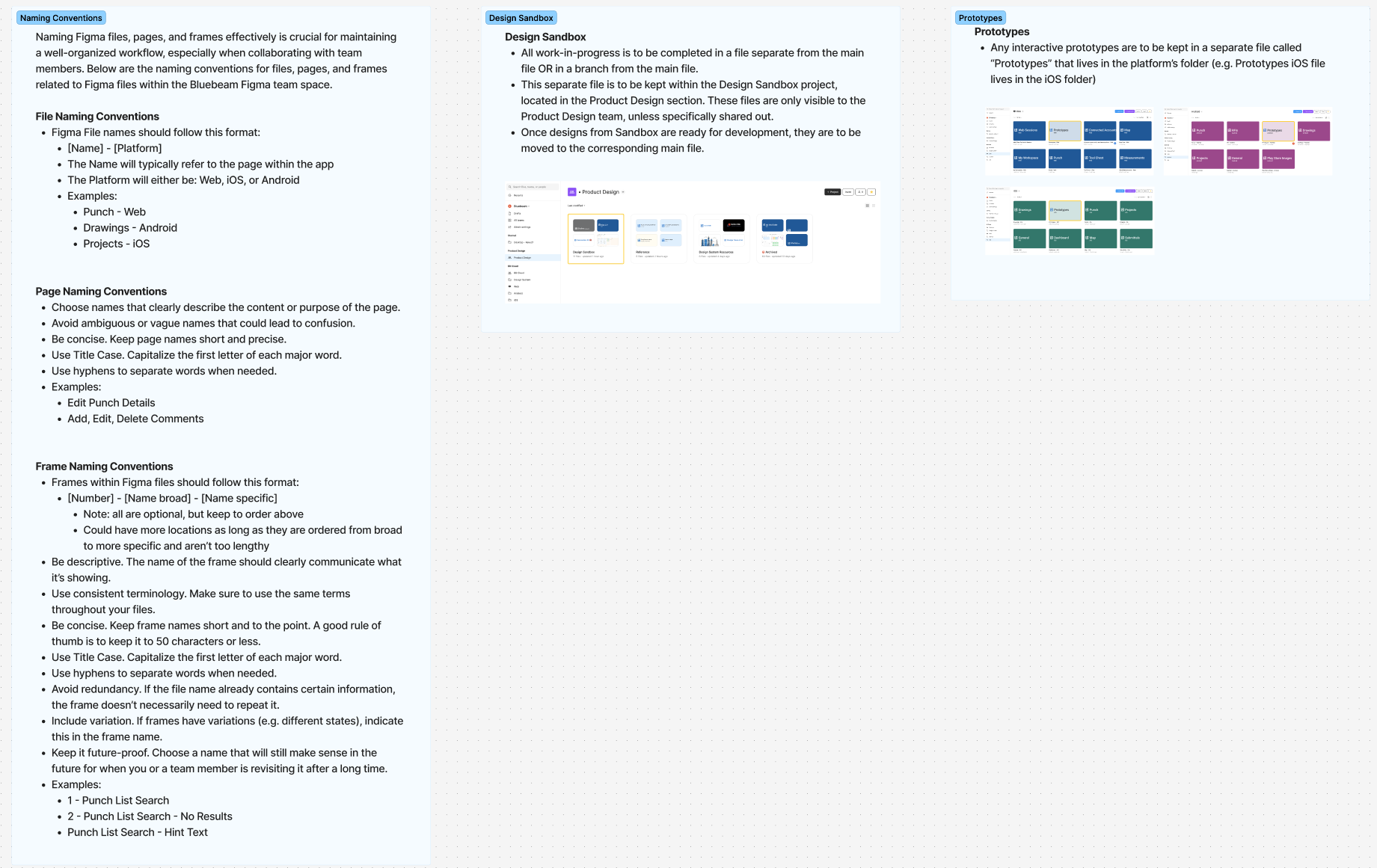
As the number of projects and contributors grew, maintaining a well-organized design workspace became increasingly important.
I introduced guidelines that established standards for:
- File naming conventions
- Page organization
- Frame naming patterns
- Dedicated sandbox environments for exploration work
- Prototype management
These standards improved discoverability across design files and made collaboration with engineers more efficient.
Design Team Rituals
To strengthen collaboration across the design team, I introduced bi-weekly Design Jams, providing a dedicated space for designers to share ideas and learn from one another.
These sessions included topics such as:
- Design critiques
- Cross-team design challenges
- Workflow improvements
- Emerging patterns across products
This ritual created a consistent forum for collaboration and helped strengthen the team’s design culture.
Impact
These Design Operations frameworks helped create a more scalable and collaborative design practice.
Key outcomes included:
- Improved alignment between design, product, and engineering
- Reduced ambiguity in design documentation and handoff
- Greater visibility into design work across teams
- More consistent documentation and design workflows
- Stronger collaboration and knowledge sharing within the design team
Most importantly, these operational foundations allowed the design team to scale more effectively as the product organization continued to grow.
Leadership Reflection
Design teams do not scale through talent alone, they scale through systems that support how teams work together.
By introducing shared frameworks for collaboration, documentation, planning, and tooling governance, I helped transform the design team from a set of individual workflows into a cohesive and scalable design practice.
These operational foundations continue to support how the team collaborates across disciplines and delivers high-quality product experiences.