Case Study: Designing a Scalable Subscription Purchase Journey
Supporting the launch of a new webstore and in-product upgrade experiences to convert trial users and collaborators into paying subscribers.
Project Overview
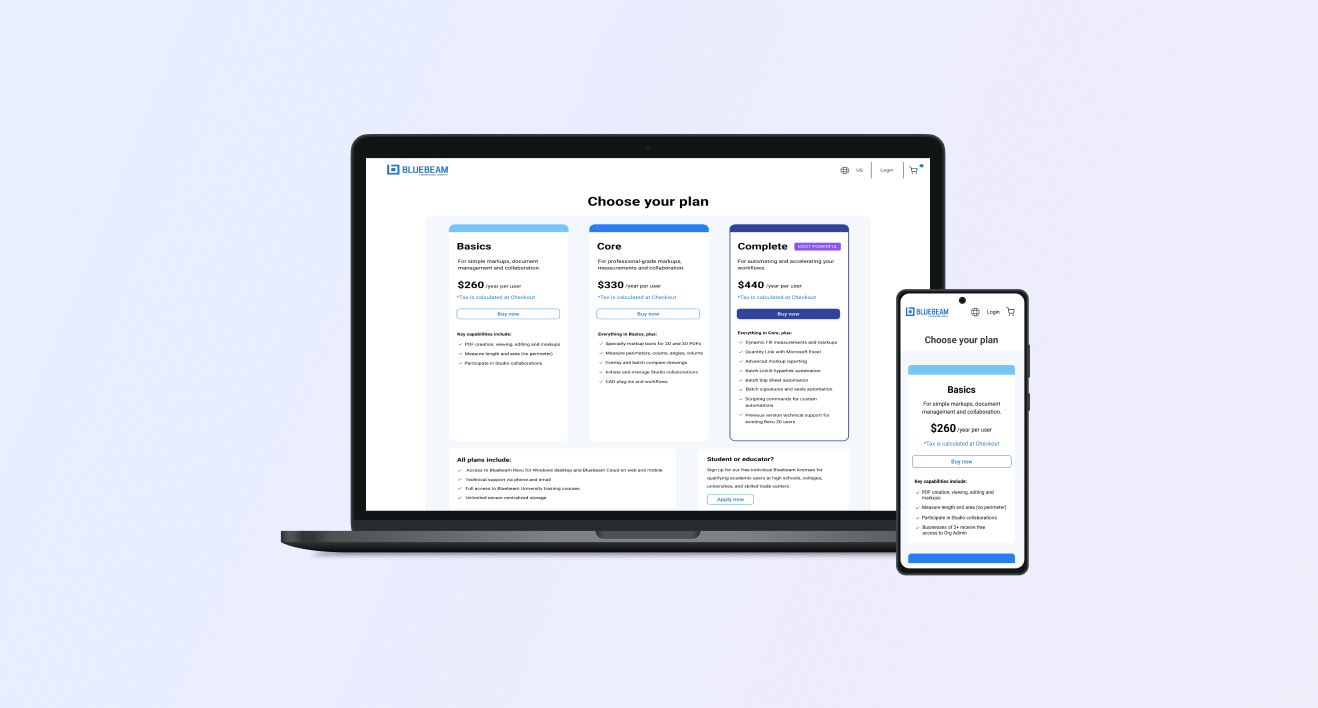
Bluebeam transitioned to a subscription-based model and needed a new scalable way for customers to purchase and manage licenses across multiple entry points.
To address this, we introduced a new webstore and unified purchase flow that enabled users to discover plans, compare options, and complete checkout seamlessly. In parallel, we designed in-product upgrade experiences that surfaced at key lifecycle moments, creating natural opportunities for users to convert.
As the Design Manager, I supported a Senior Product Designer leading the work by helping define the commerce strategy, lifecycle framework, and cross-team alignment needed to launch the experience.
The goal was to create a scalable commerce foundation that could drive conversion, encourage upgrades, and support future monetization opportunities.
Leadership & Role
Role: Senior Product Design Manager
Team: 1 Senior Product Designer (direct report)
Partners: Product Management, Engineering, Growth, and Marketing
This initiative was led by a Senior Product Designer on my team. As the Design Manager, my role was to provide strategic guidance, product direction, and cross-functional alignment to ensure the work supported Bluebeam’s broader shift toward a subscription-based business model.
My responsibilities included:
- Helping define the subscription lifecycle framework that guided the purchase and upgrade experiences
- Coaching the designer through complex purchase flow and monetization design challenges
- Partnering with Product and Engineering leadership to align on the commerce platform strategy
- Ensuring the experience could scale across webstore and in-product upgrade surfaces
This approach allowed the team to move quickly while maintaining a cohesive purchase journey across multiple entry points.
Understanding the Subscription Lifecycle
To design an effective purchase experience, we first mapped the customer lifecycle from trial to paid subscription.
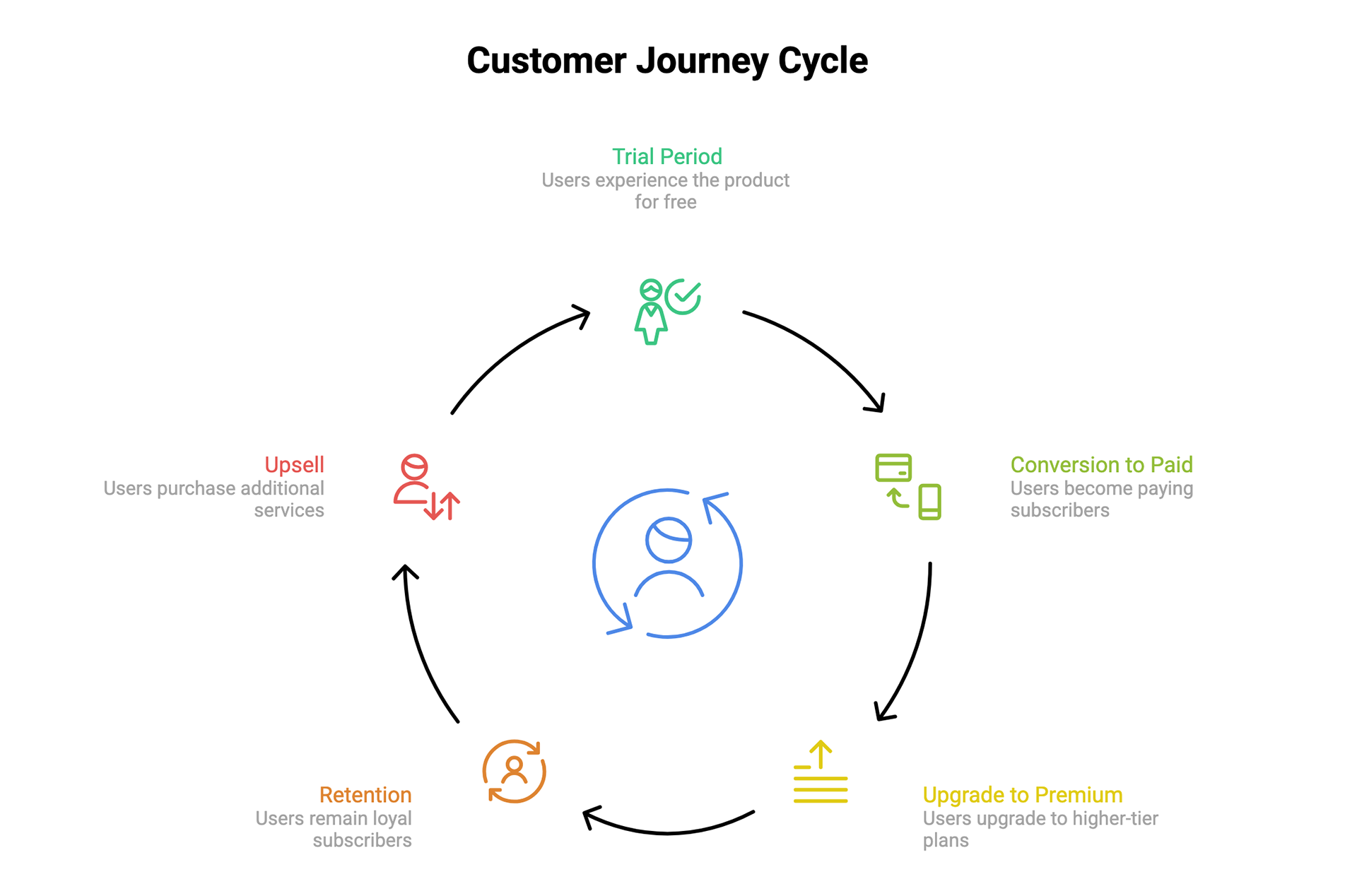
Users encountered upgrade opportunities in several contexts:
- New users starting a free trial
- Active trial users exploring product features
- Trial users approaching expiration
- Expired trial users returning to the product
- Free collaborators invited into projects
Each state represented a different level of product familiarity and purchase intent, requiring tailored messaging and conversion paths.
By mapping these lifecycle stages, we were able to identify where monetization moments should appear across the product and webstore, ensuring that users always had a clear path to upgrade.
Designing a Seamless Purchase Flow
With lifecycle moments defined, we designed a simplified purchase journey that allowed users to move from plan discovery to checkout with minimal friction.
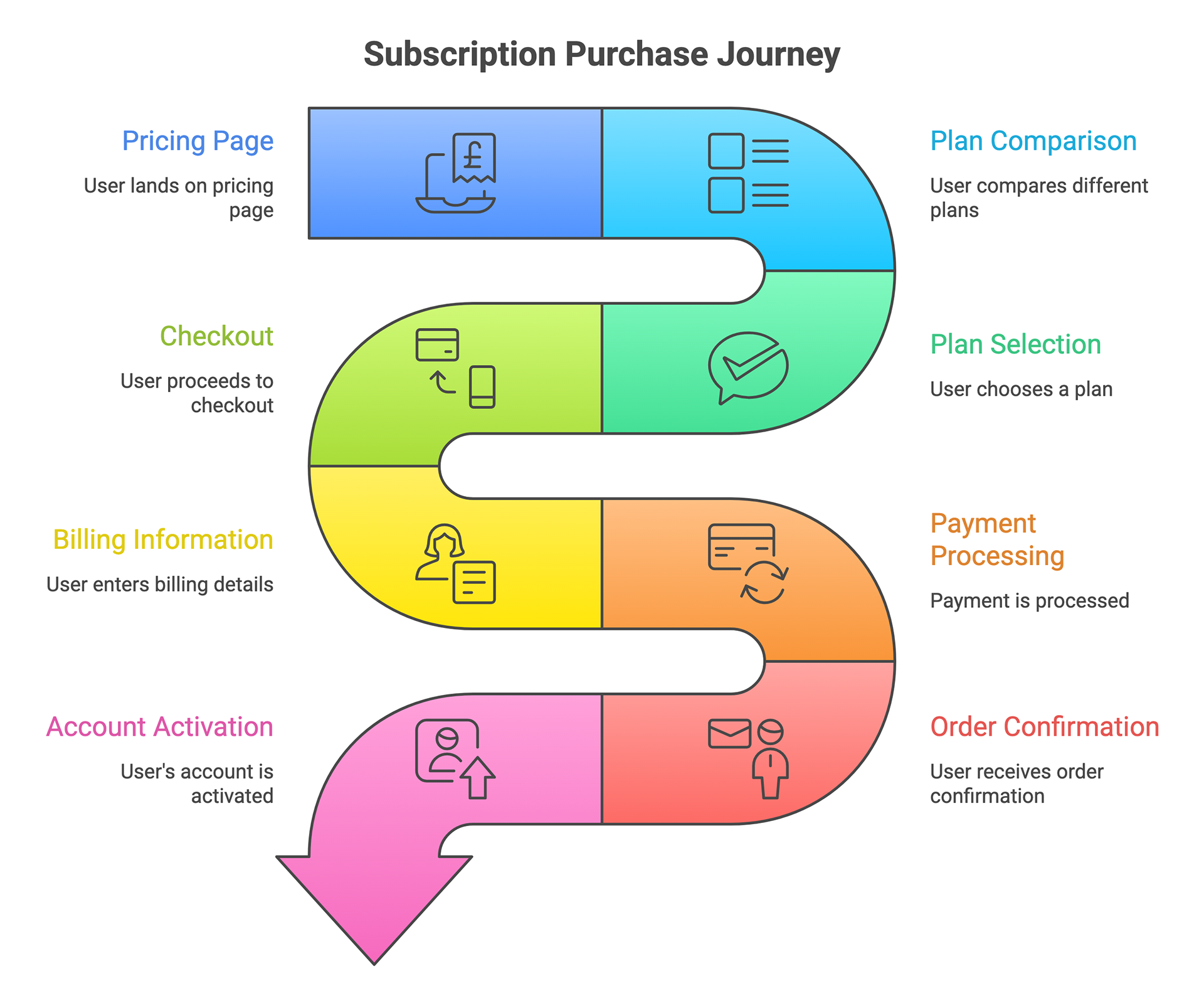
The new flow introduced:
- A webstore pricing page where customers could compare plans and features
- A clear plan selection experience designed for both individuals and teams
- A streamlined checkout flow for subscription purchase
- Opportunities to add optional add-ons and certifications during checkout
This structure allowed both new customers and in-product upgrade flows to converge on the same purchasing experience, creating a consistent and scalable commerce platform.
Creating Natural Upsell Opportunities
Beyond the purchase flow itself, we focused on embedding upgrade opportunities directly into the product experience.
Rather than relying solely on marketing-driven conversion, the strategy was to introduce contextual prompts at moments when users were most likely to see value.
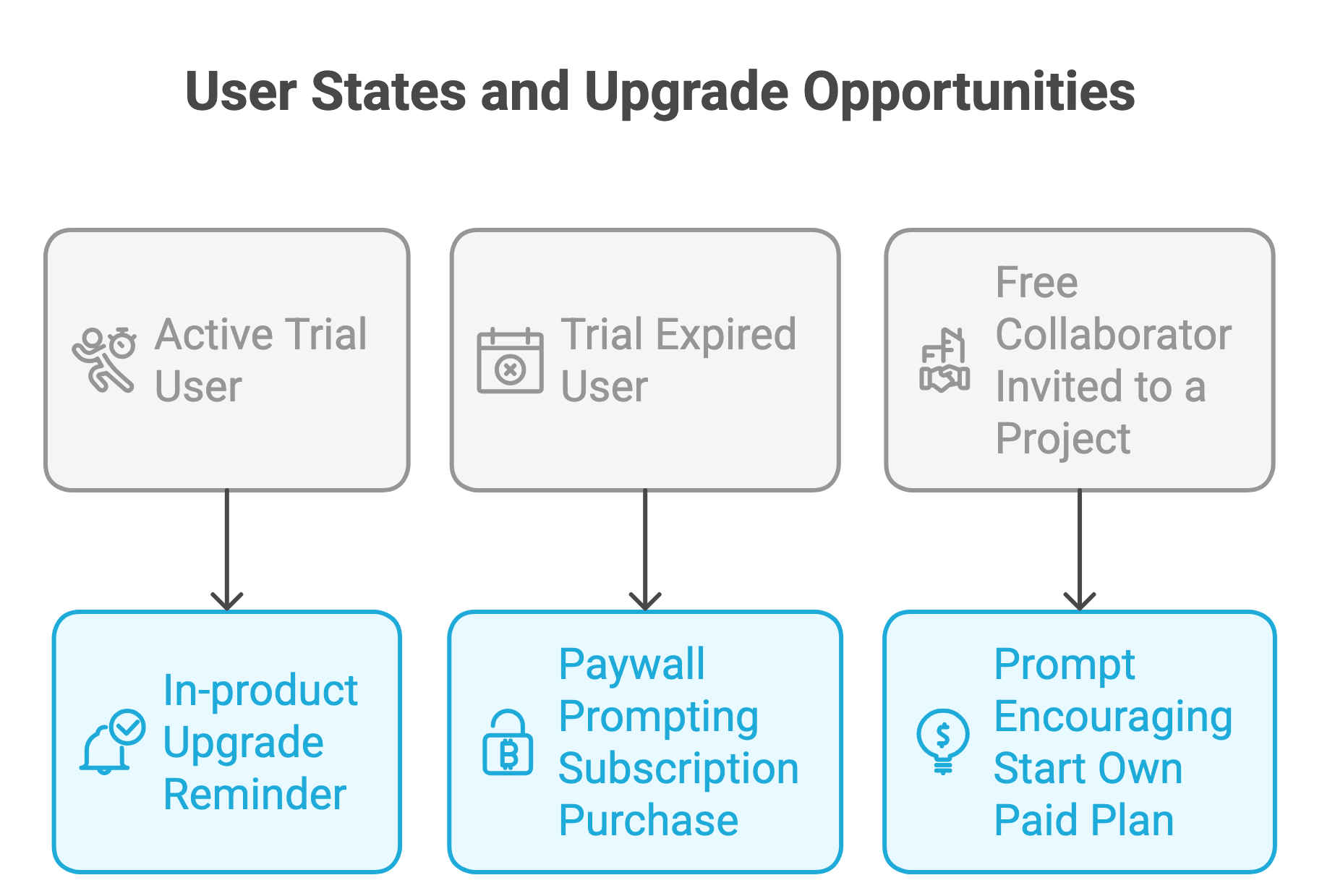
Examples included:
- Active trial users receiving upgrade prompts while using premium features
- Expired trial users encountering a paywall when attempting to access restricted capabilities
- Free collaborators being invited to start their own subscription after engaging in shared projects
These touchpoints ensured that users encountered clear, relevant upgrade opportunities aligned with their product usage and lifecycle stage.
Webstore Experience
The pricing page served as the primary entry point for new customers and upgrade paths from within the product.
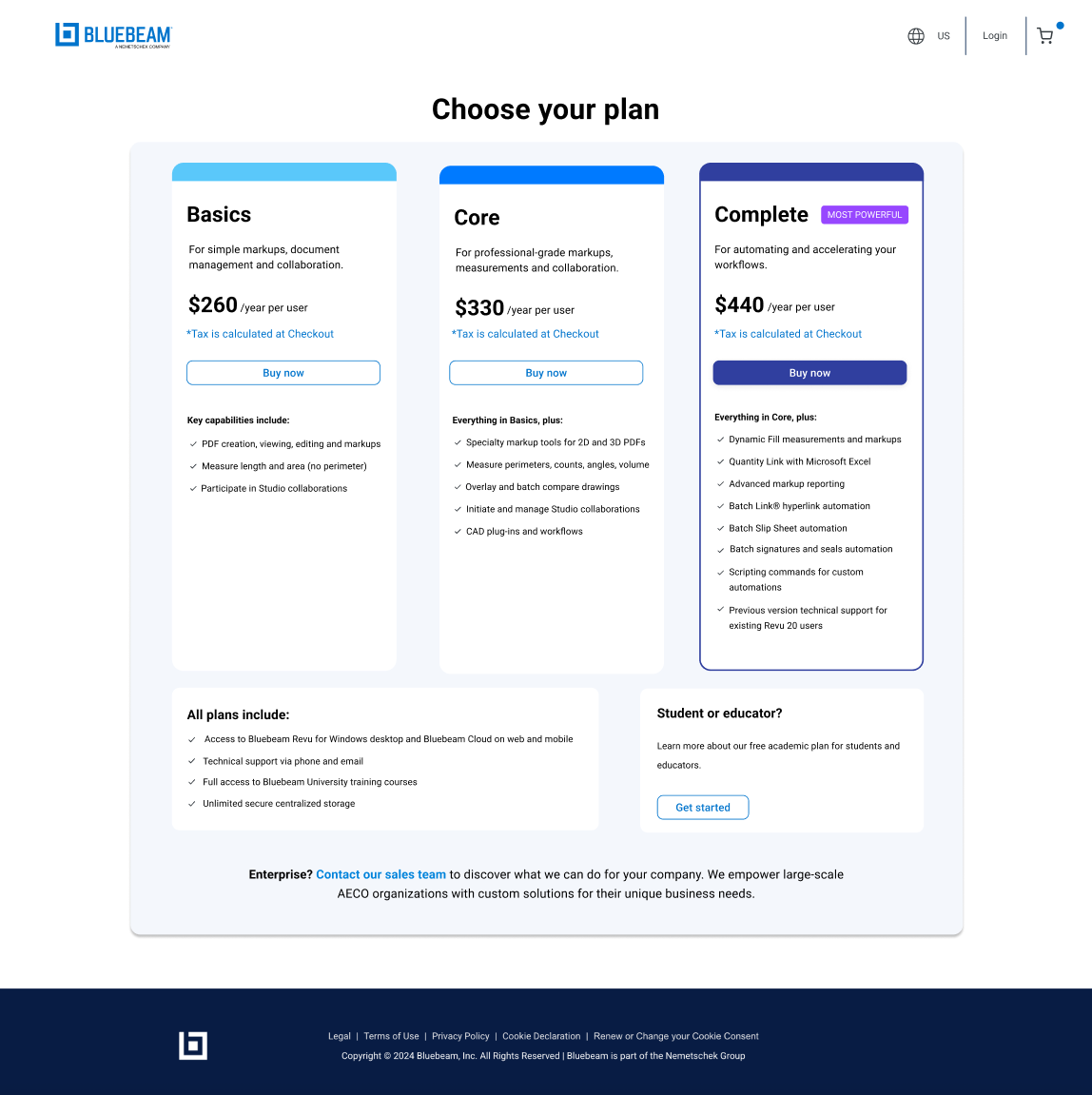
Key design goals included:
- Clearly communicating differences between subscription tiers
- Helping teams determine the plan that best fit their needs
- Providing a frictionless transition into the checkout flow
The layout emphasized plan comparison, feature clarity, and simple calls to action to guide users toward the right plan.
Checkout Experience
The checkout flow was designed to support both individual purchasers and team administrators.
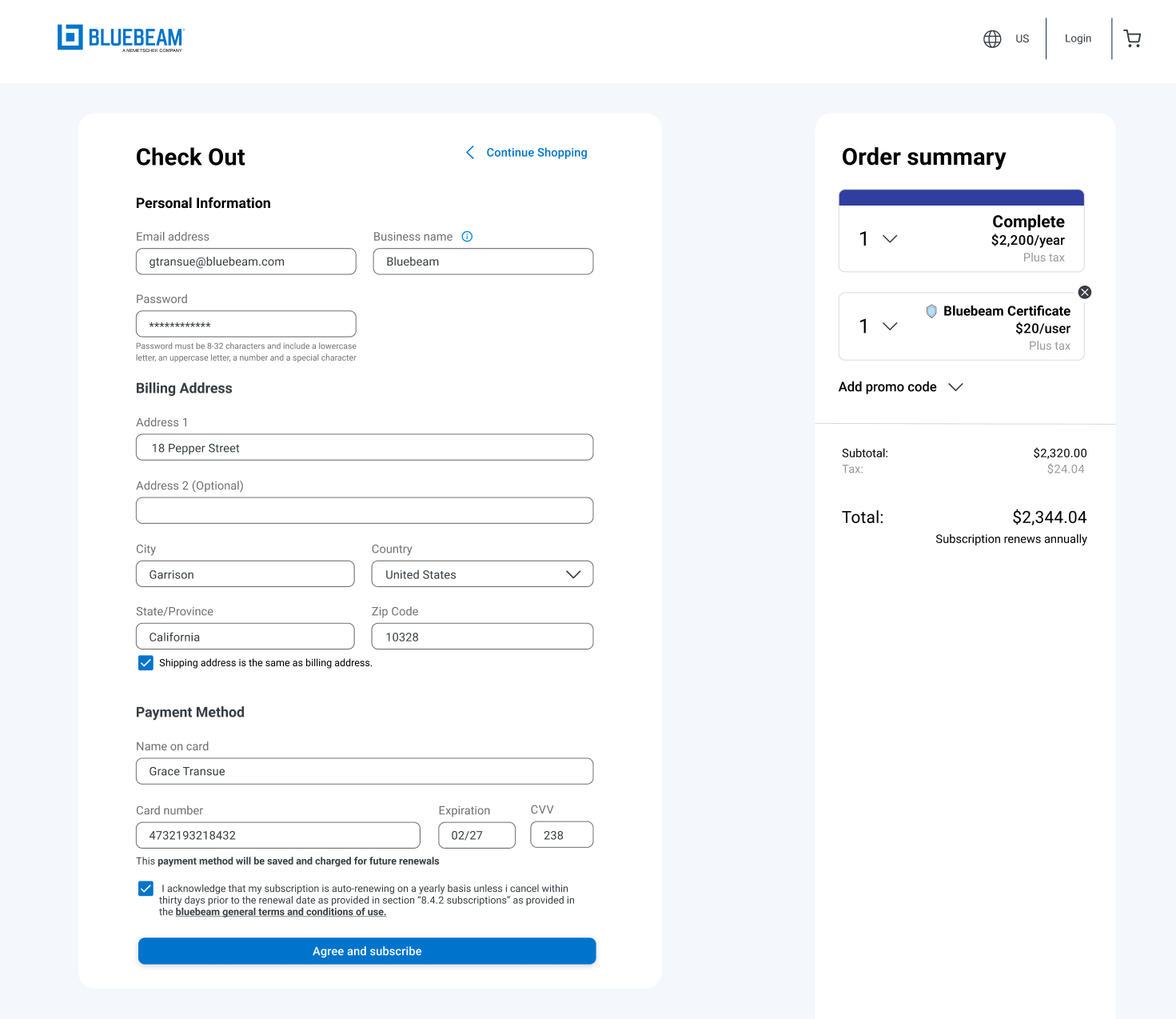
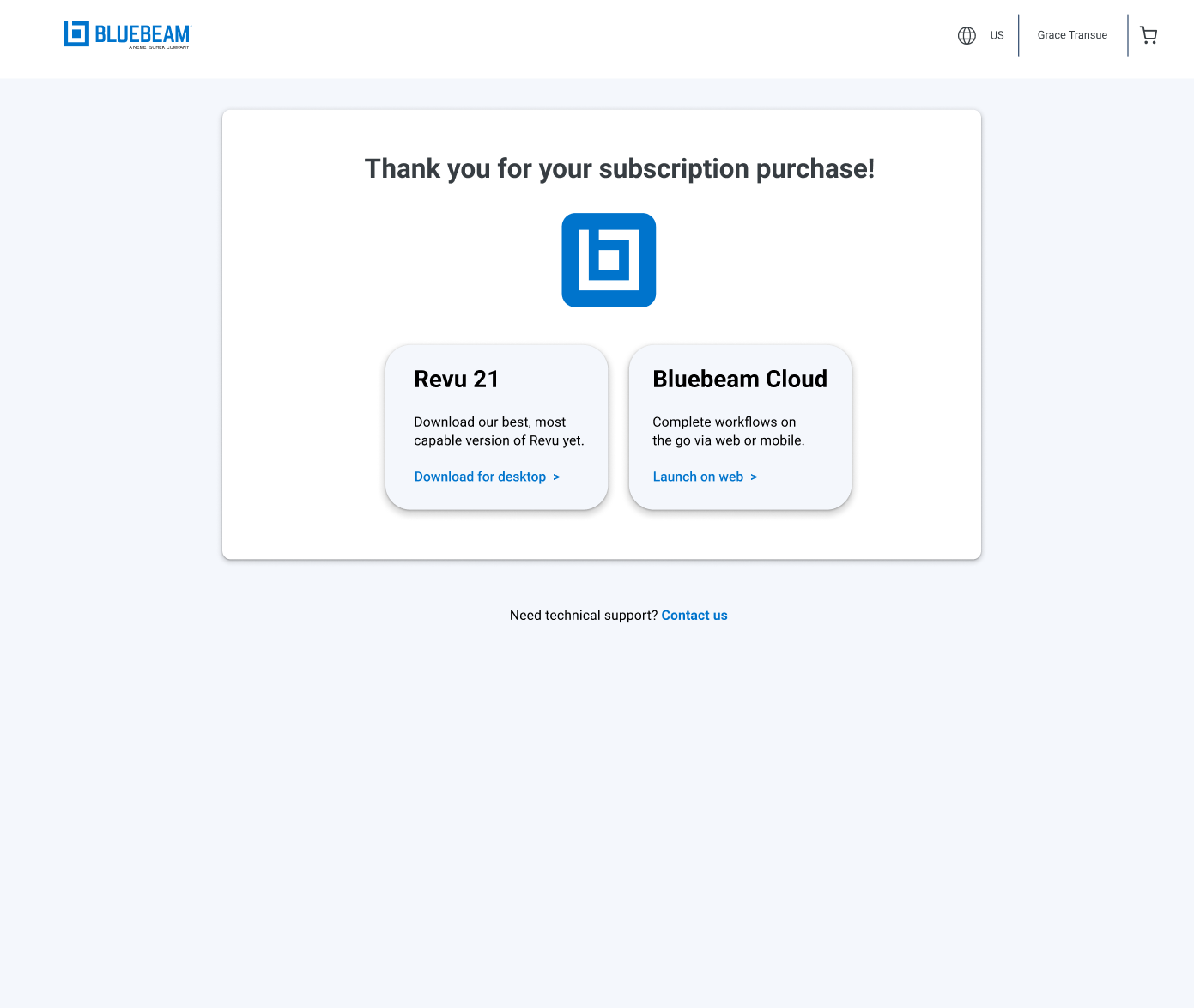
Key improvements included:
- Streamlined billing and payment information entry
- Clear order summaries before purchase
- Support for optional add-ons and certifications
- Reduced friction between plan selection and payment confirmation
This flow created a consistent purchase experience regardless of whether users entered from the webstore or from within the product.
In-Product Upgrade Experiences
To complement the webstore, we introduced in-product upgrade prompts that appeared at meaningful moments in the user journey.
These experiences ensured that users who discovered value inside the product could upgrade without needing to leave their workflow.
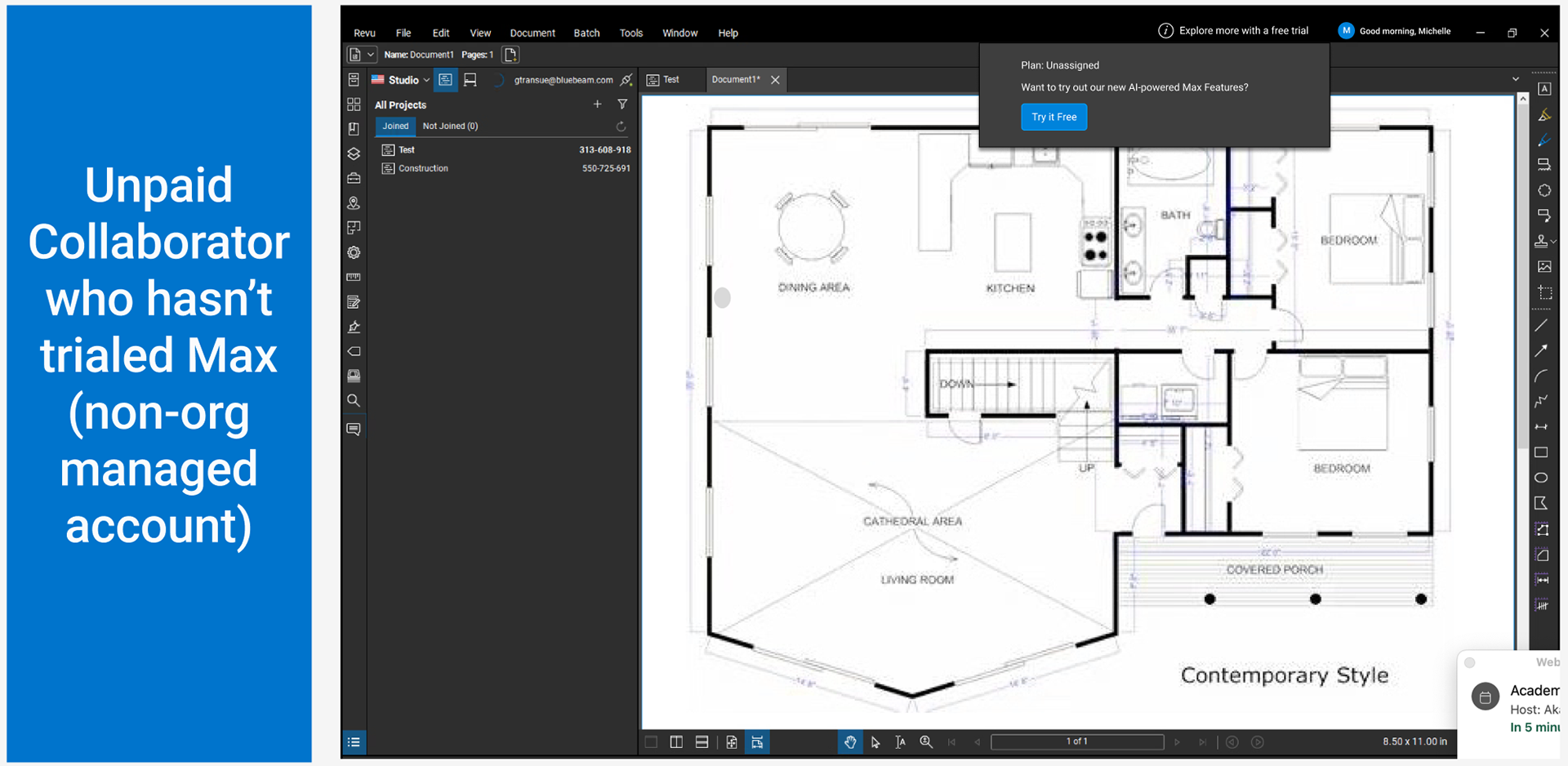
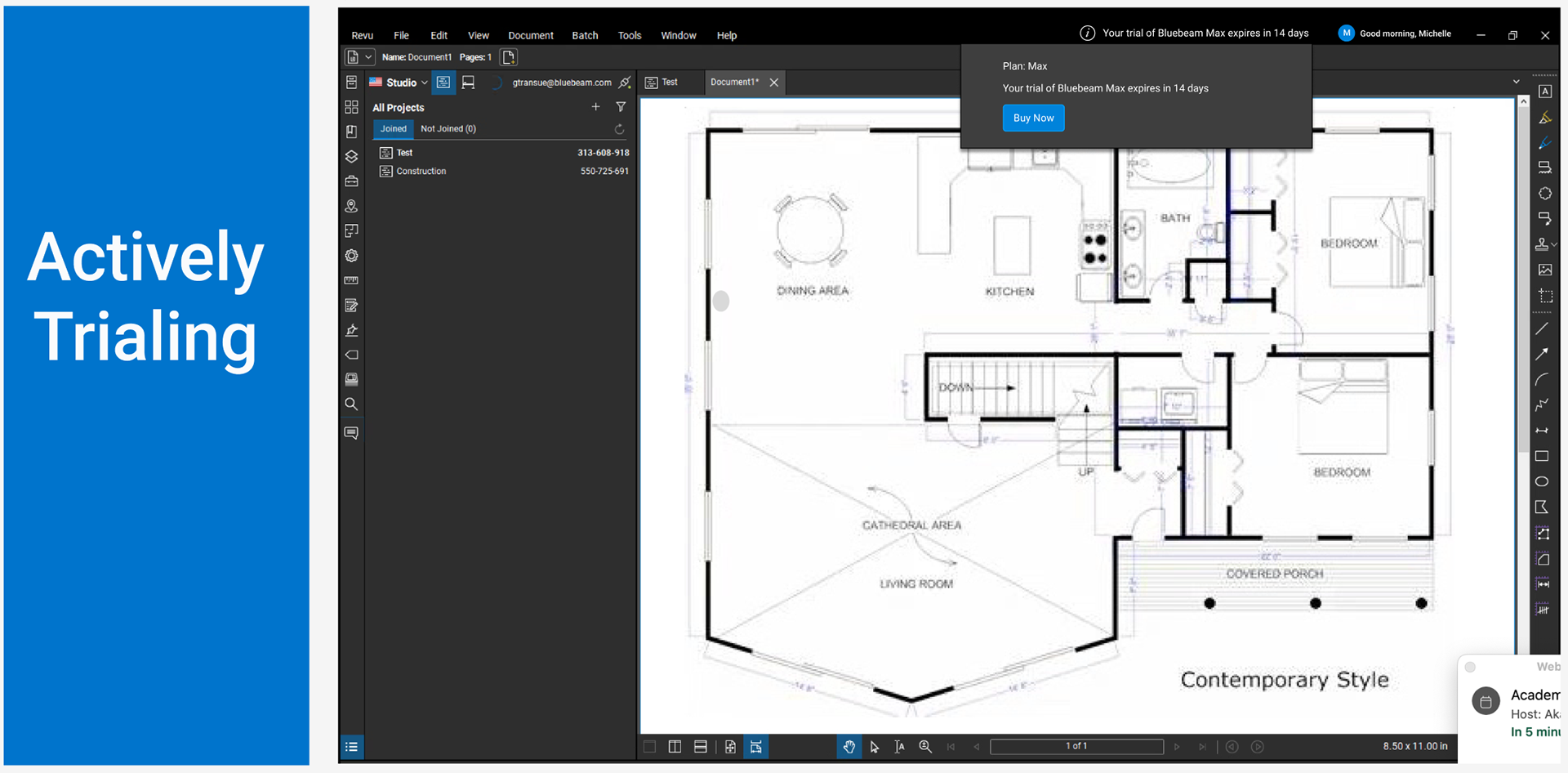
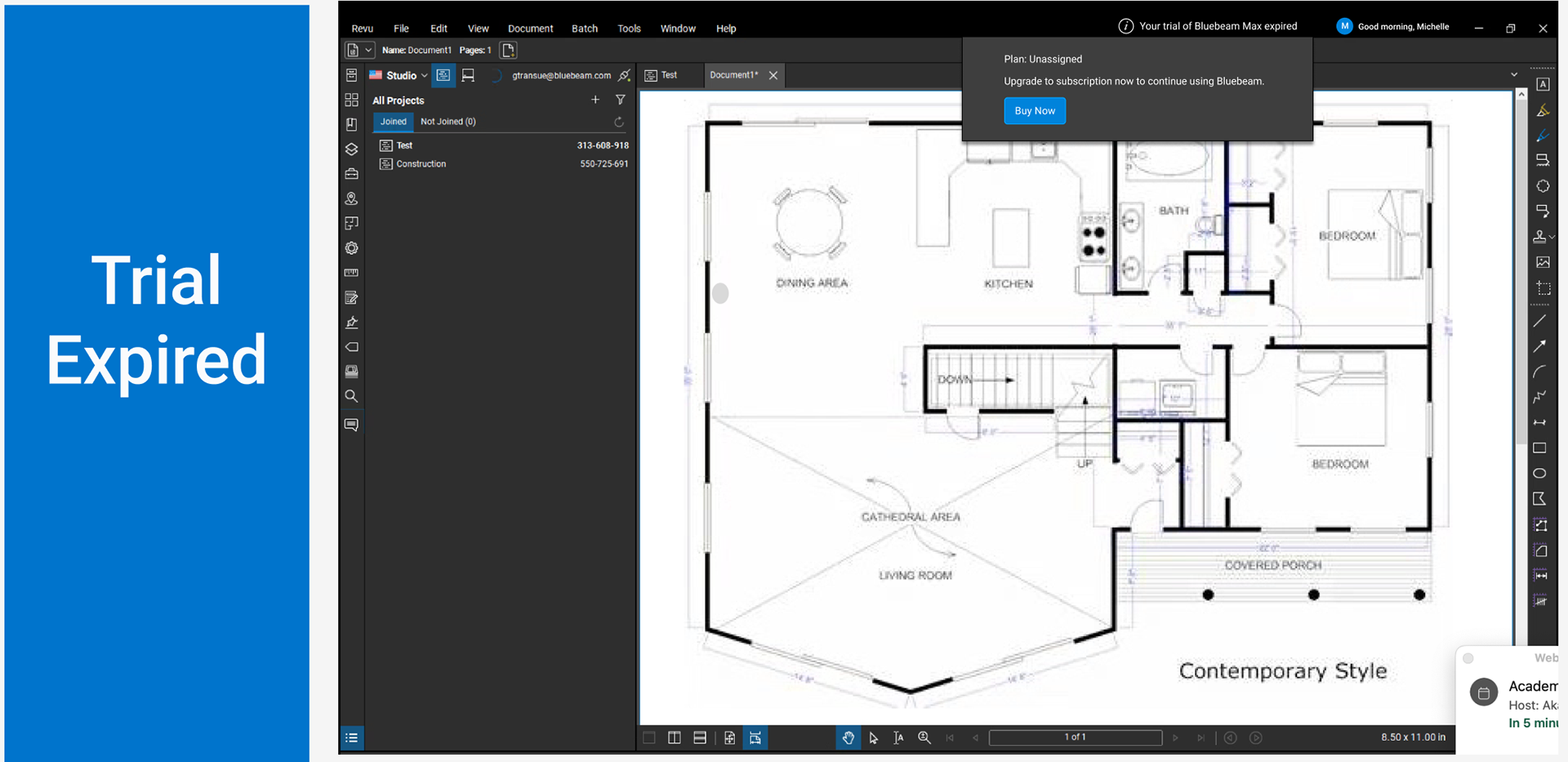
Examples included:
- Upgrade prompts for active trial users exploring advanced features
- Paywalls for expired trials attempting to access restricted functionality
- Conversion opportunities for collaborators who were actively participating in projects
Together, these moments created a holistic conversion strategy that connected product usage with subscription purchase.
Impact
This initiative helped establish the foundation for Bluebeam’s subscription purchase ecosystem, aligning webstore experiences with in-product conversion moments.
The work enabled:
- A scalable platform for subscription purchases
- Clearer upgrade paths across the product lifecycle
- More consistent commerce experiences across web and product surfaces
As a design leader on the initiative, I focused on aligning teams around the purchase journey strategy, mentoring the designer leading the work, and ensuring the experience scaled across the broader product ecosystem.